Hurricane Helene made landfall a year ago. Why was it so deadly?
Hurricane Helene delivered a painful message about hurricane dangers to millions during its terrifying trek a year ago.
Tropical cyclones are far from just a coastal threat, wreaking deadly and devastating impacts much farther away than many realize, whether it’s winds, rain or river flooding miles downstream.
"Helene was a really powerful example of how far the impacts of a hurricane can reach inland, and how complicated the messaging can be in those situations," said Andrea Schumacher, a project scientist studying weather risks and decisions in society at the National Science Foundation's National Center for Atmospheric Research.
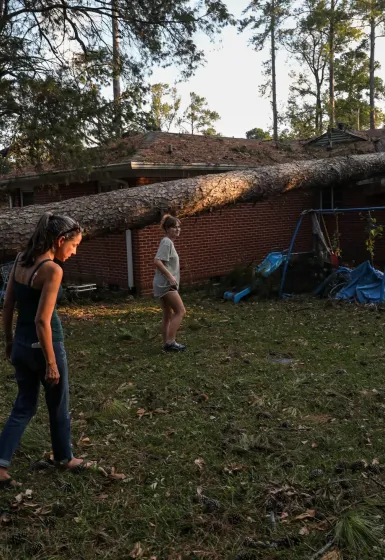
While flooding caused the most devastation, the storm's winds also showed how far Helene's impacts reached. A peak gust of 68 mph was reported at Indianapolis International Airport, more than 700 miles from where Helene's most powerful winds and storm surge had arrived around 24 hours earlier.
Many along Helene's path may have had more experience hearing about hurricanes than preparing for major impacts, Schumacher said. Since Helene, she's been "grappling with the question of how we get people's attention when the weather is doing something 'different than it always has in the past.'"
Helene was born in the northwestern Caribbean on Sept. 24, 2024. It quickly proved to be one of the kinds of storms that forecasters fear the most, rapidly intensifying into a powerful Category 4 hurricane and making landfall near Perry, Florida less than 72 hours later.
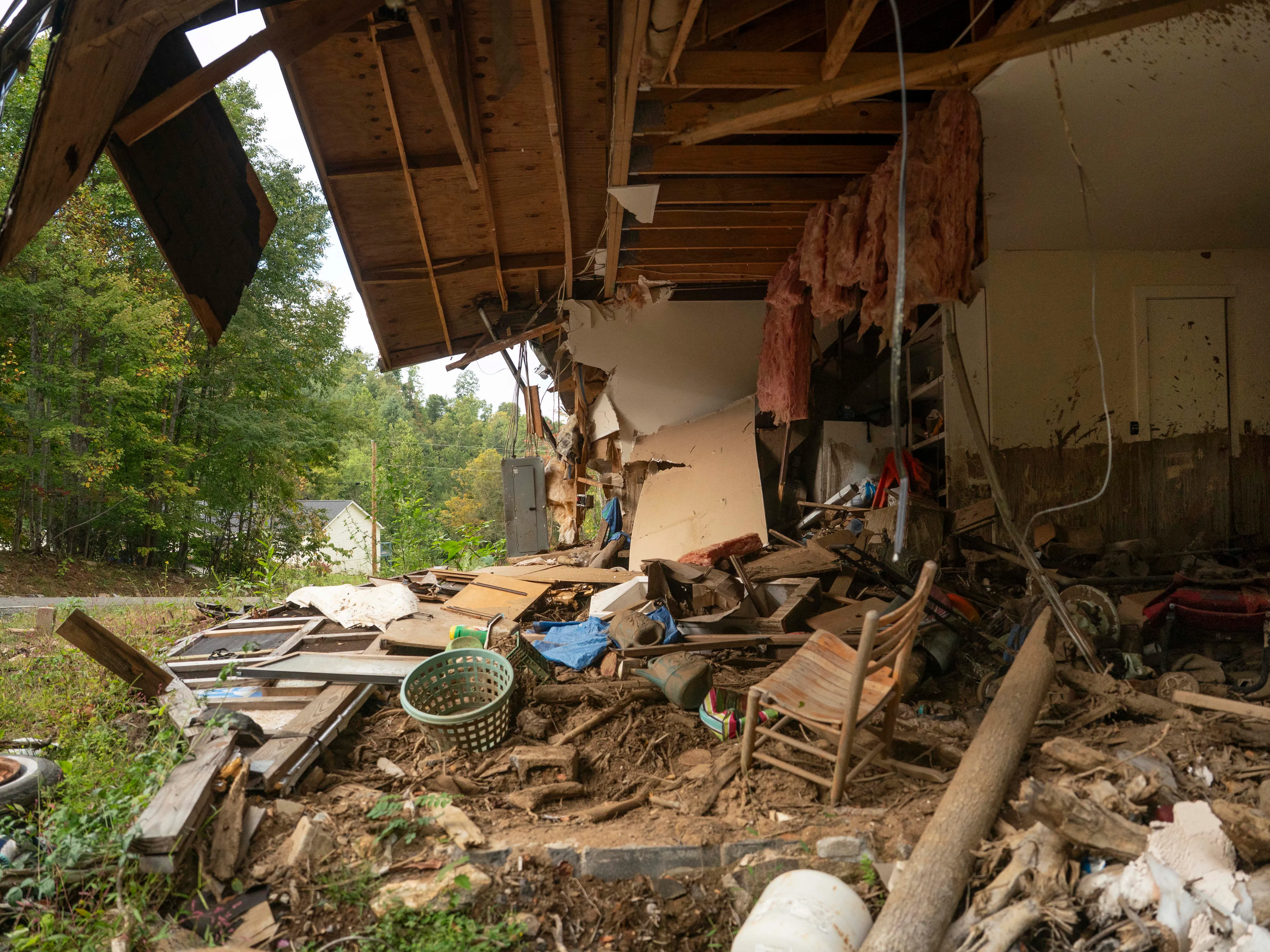
A combination of weather factors and geography helped make it one of the more brutal hurricanes in modern history. Its quick forward speed spared Florida prolonged winds and rain but plagued those who felt hurricane-force wind gusts hundreds of miles inland. A double whammy from a colliding weather pattern set up historic rainfall across the North Carolina and Tennessee mountains.
Helene shocked people from the plains and pine forests of Central and Eastern Georgia through scenic mountain vistas in North Carolina and Tennessee. It displaced thousands who lost homes, or whose properties suffered major damages. A year later, many hurricane victims from Florida to Tennessee continue to struggle with attempts to rebuild and recover.
"People weren't prepared at all," said Gina Heath, a resident of Marshall, North Carolina, her hometown. She and her husband are emotional health practitioners, she said, and share a practice in Marshall, where they've spent months talking with their community about trauma.
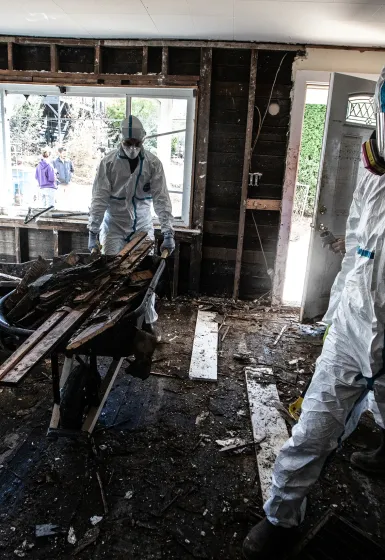
"All the neighbors were saying, floods have never, ever come to the back part of our neighborhood," Heath told USA TODAY. "And as we all know, the water came where it had never come." Of the 27 homes on their street in the Rollins neighborhood, 25 were either destroyed, demolished or suffered extensive damage that left them unlivable until they could be gutted and rebuilt, Heath said.
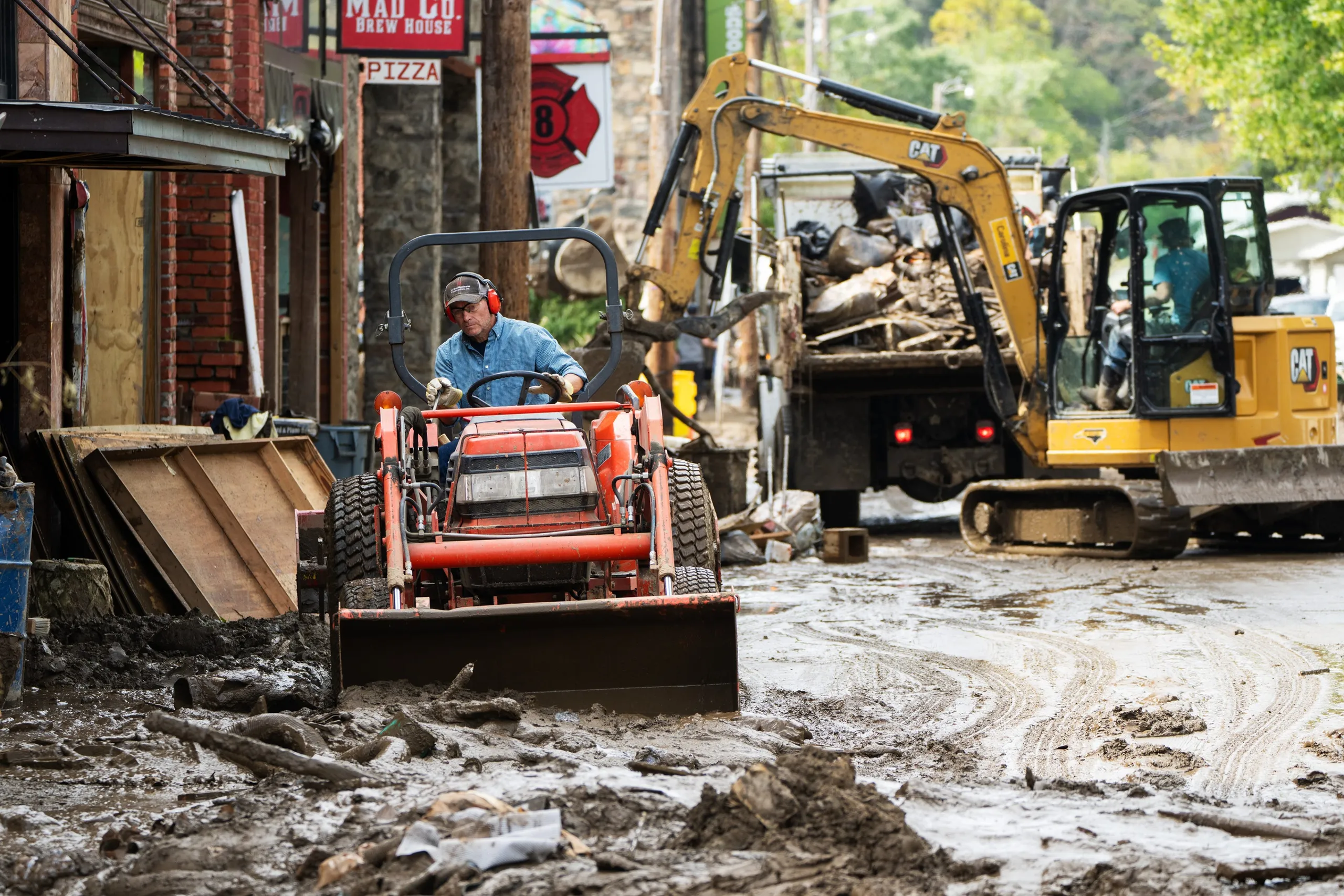
Fortunately for Heath and her family of five, before Helene arrived, her husband moved the camper they live in and travel throughout the nation in during the summer time, which saved their home. The community where they live for most of the year was buried under the French Broad River, and they lost 60 feet of their land, she said. A neighbor in his 70s died after being trapped in a tree for hours and hours, she said, while other neighbors and swift water rescuers tried desperately to devise a way to save him.
It took six months to finally remove all of the foot-deep layer of contaminated silt and other rubble that remained when the river receded, she said.
A striking toll of death and loss
The National Hurricane Center's Helene report spelled out the destruction in excruciating detail.
At least 250 storm-related deaths were reported across seven states, from Florida to Indiana. That includes 95 direct deaths from freshwater flooding, including 78 in North Carolina, 15 in Tennessee and 2 in South Carolina. At least 2,700 people were rescued from high water along Helene’s path. Half those occurred during storm surge along Florida’s west coast and more than 1,000 were during freshwater flooding in western North Carolina. Helene is the fourth deadliest hurricane in the mainland United States since 1950.
The roughly $80 billion in estimated damages puts Helene seventh on the list of costliest hurricanes in modern history, behind Katrina, Harvey, Ian, Maria, Sandy and Ida, the hurricane center said. Thousands of homes were damaged or destroyed.
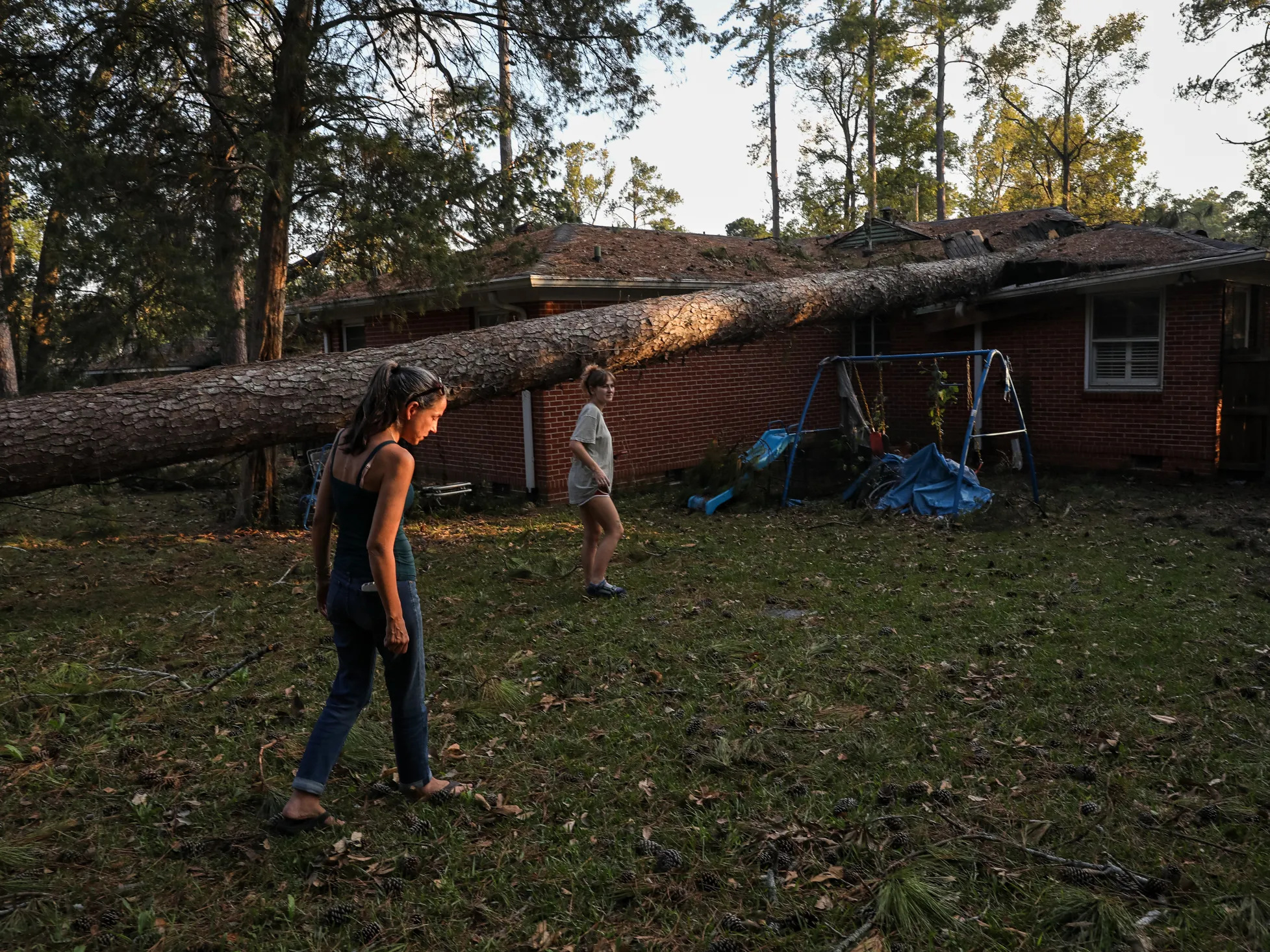
High winds
A hurricane's winds often weaken quickly once they encounter friction with the ground, trees and buildings at landfall, but Helene’s high winds moved “much farther inland” than other hurricanes, the hurricane center said. The peak winds felt along a hurricane's path are often never adequately measured by either permanent or temporary weather stations, either because of location or equipment failures.
Damage surveys by National Weather Service meteorologists concluded wind gusts across much of North Florida, eastern Georgia and into central and western South Carolina probably exceeded 80 mph and may have exceeded gusts of more than 100 mph in some areas.
- Georgia: A peak gust of 100 mph was measured at the Bacon County Airport in Alma, more than 130 miles from landfall.
- South Carolina: A 77 mph gust was recorded at Laurens, more than 325 miles from landfall.
-
North Carolina: Higher elevations along the state’s western mountains experienced hurricane-force winds.
- Sustained winds atop Mount Mitchell, the state’s highest peak, were Category One strength at 80 mph, even though Helene’s circulation had been downgraded to a tropical storm by the time it arrived in the mountains. A peak gust of 105.8 mph was the highest measured gust along the storm’s path.
- A 101 mph wind gust was recorded near Banner Elk, more than 440 miles from landfall.
- Helene produced 39 tornadoes across five states, including a 1,100 yard EF-1 in Cordova, South Carolina that is the widest documented tropical storm tornado in the U.S., dating back to 1995.
Catastrophic storm surge in Florida
A "catastrophic” surge of seawater reached heights up to 16 feet above dry ground where Helene made landfall on North Florida's Gulf coast, the hurricane center reported. Near Keaton Beach, “entire homes appear to have been picked up by the storm surge and moved to remote wetlands.”
In communities along Helene's path, its victims recall a year of stress and difficult emotions as they deal with grief, loss and decisions about how - or whether - to rebuild, as well as frustrations with insurance companies, building permits and feelings of abandonment by some of the officials who showed up for photos in the early days.
“I just feel like we’ve been totally forgotten,” said Mandy Adams, a Keaton Beach resident.
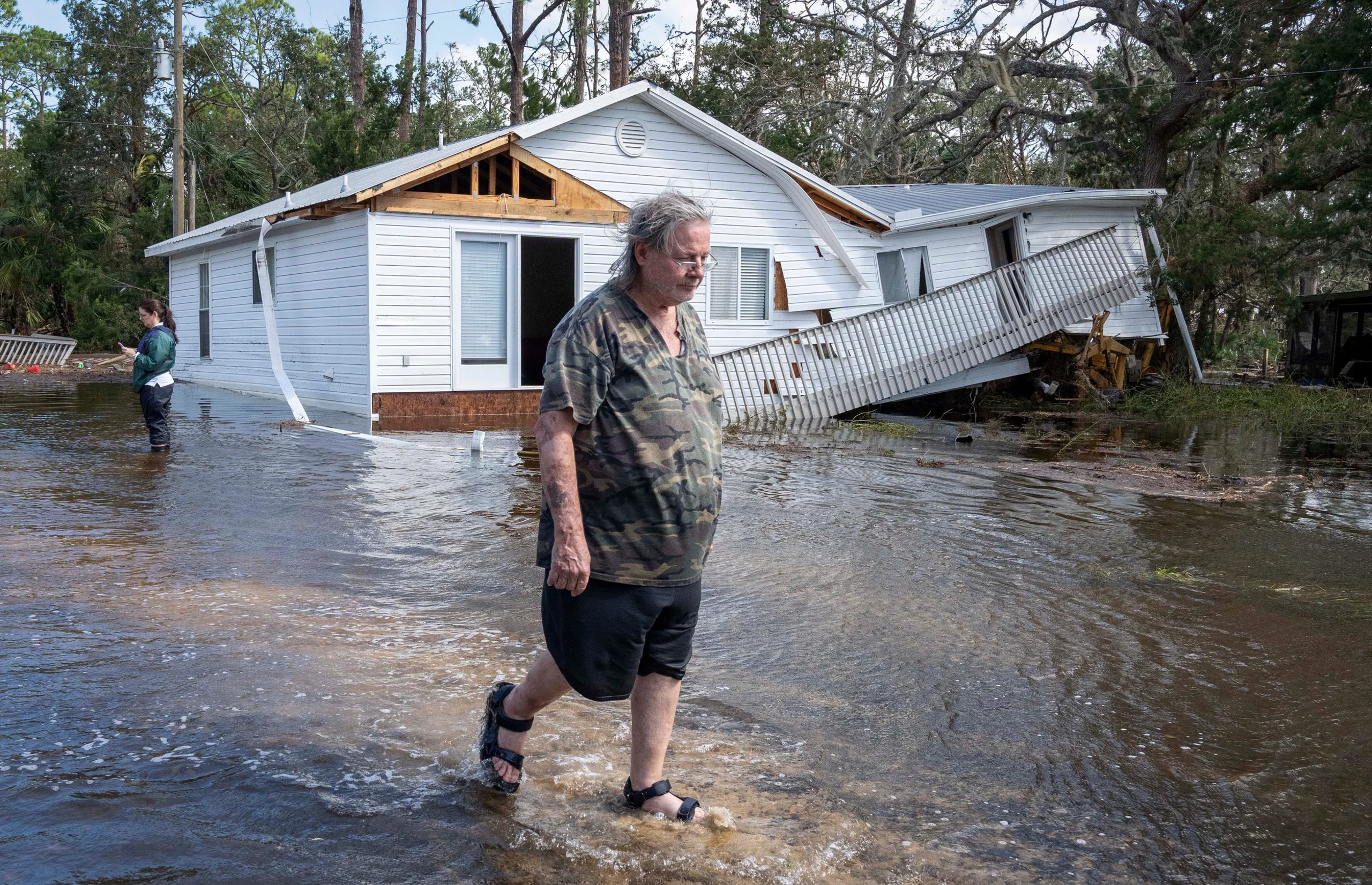
Surge destroyed about 80% of the buildings in Keaton Beach and Steinhatchee, and about 70% of the community of Horseshoe Beach, according to the center.
- A stream gauge 2 miles inland from the mouth of the Steinhatchee River failed, but a post-storm survey found a high-water mark of 14.25 feet, more than 4 feet higher than during Hurricane Idalia 13 months earlier.
- In Cedar Key, roughly 50 miles to the south, a tide gauge measured its highest water level since the station began reporting in 1914. The water destroyed homes with its height and force.
- In Citrus County, more than 75 miles to the south, the surge inundated at least 300 homes with water up to 5 feet deep.
- Water levels of two feet above ground level or more were reported along more than 380 miles of Florida coastline, from Apalachicola on the northern Gulf coast to Naples on the southwest coast.
Rainfall
Trillions upon trillions of gallons of water fell as rain, enhanced by a rain event across the mountains even before Helene made landfall. Rainfall greater than 10 inches fell across six states.
Across a large swath of the mountainous regions, 20 to 30 inches of rain saturated soils and swelled stream and river levels.
At Busick, North Carolina, near Mount Mitchell, 30.78 inches of rain fell over four days, according to the National Oceanographic and Atmospheric Administration's National Centers for Environmental Information. More than 18 inches of rain fell across portions of a dozen counties in North Carolina and northern South Carolina.
The rain sent rivers to record highs that washed away homes and roads and caused more than 2,000 landslides in the region, according to the U.S. Geological Survey.
Highest rainfall in other states:
- South Carolina: Sunfish Mountain, 21.66
- Georgia: Dillard, 14.64 inches
- Florida: Sumatra, 14.39
- Tennessee: Trade, 10.98
- Virginia: Galax, 10.89
- Ohio: Rosemount, 8.51
- Alabama: Pansey, 8.5
- Kentucky: Henderson, 7.67
- Illinois: 7.47
- West Virginia 6.11
- Indiana 5.69
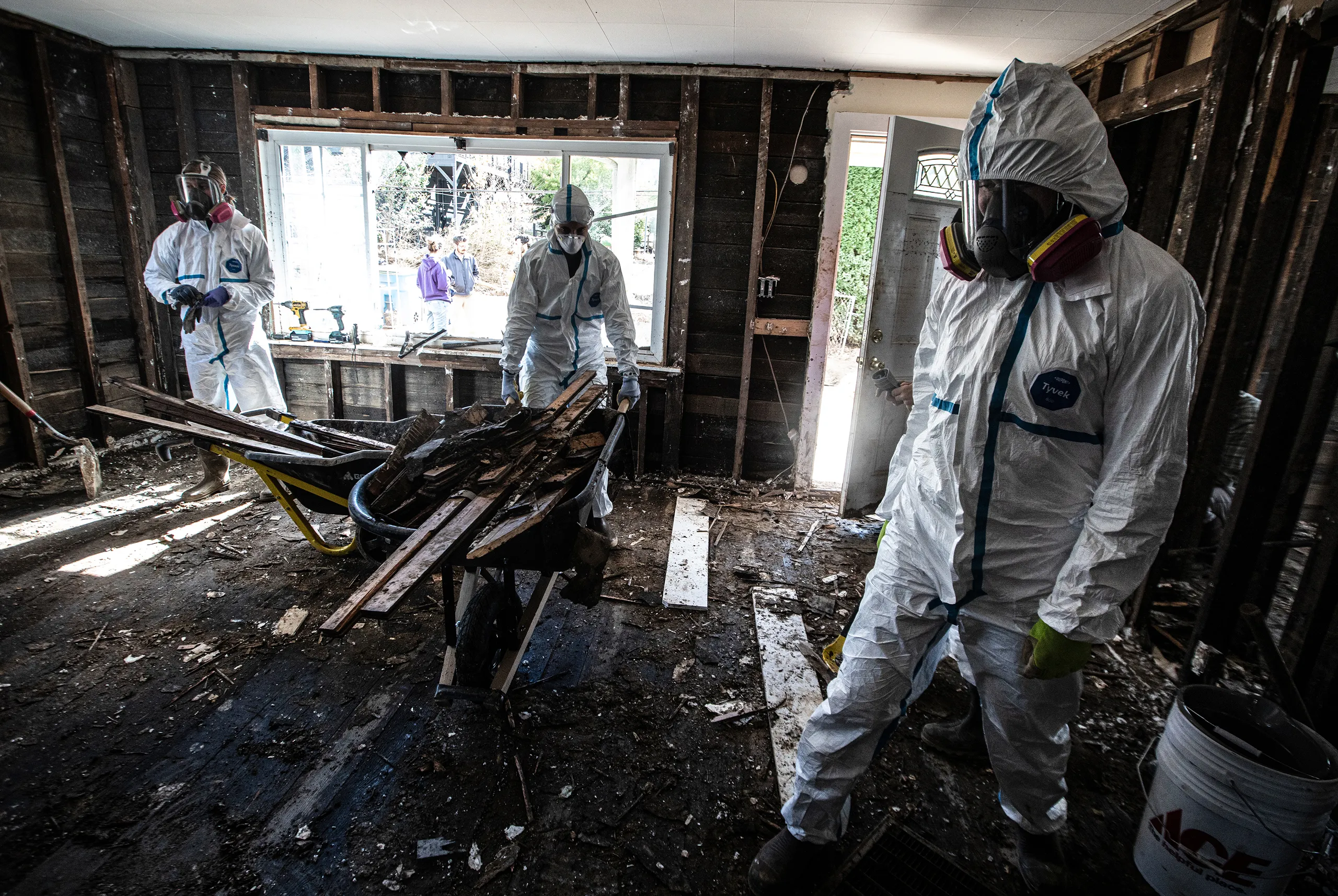
On Sept. 27, 2024, April Blair, 52, watched as her house and several of her neighbors’ were submerged and splintered by the flooded Rocky Broad River in Bat Cave, North Carolina. The group was trapped, and broke a lock off the window of a nearby church to take refuge for two nights until the National Guard came to help them.
In September, Blair told the Hendersonville Times-News: “It's been a journey, and I'm exhausted."